To end this blog I chose to post a song called "Imagine" (by John Lennon). I think it's a great music and we should pay atention to its lyrics. If this could happen, the world would be a better place: no racism, no prejudice, no xenophobia. We could have equal rights. There wouldn't be war and we could share the world in peace...
Imagine there's no heaven It's easy if you try No hell below us Above us only sky
Imagine all the people Living for today
Imagine there's no countries It isn't hard to do Nothing to kill or die for And no religion too
Imagine all the people Living life in peace You may say, I'm a dreamer But I'm not the only one I hope some day You'll join us And the world will be as one
Imagine no possessions I wonder if you can No need for greed or hunger A brotherhood of man
Imagine all the people Sharing all the world
You may say, I'm a dreamer But I'm not the only one I hope some day You'll join us And the world will be as one
This video presents an initiative of UNESCO called "World Day for Cultural Diversity". It was a concert where people from different countries show a little of their culture, trough music.
Racism is a belief or ideology that all members of each racial group possess characteristics or abilities specific to that race, especially to distinguish it as being either superior or inferior to another racial group or racial groups.
Xenophobia is intense or irrational dislike or fear of people from other countries.
Racism types: Racial discrimination: Racial discrimination is treating people differently through a process of social division into categories not necessarily related to race. Institutional: is racial discrimination by governments, corporations, educational institutions or other large organizations with the power to influence the lives of many individuals. Economic: Historical economic or social disparity is alleged to be a form of discrimination which is caused by past racism and historical reasons, affecting the present generation through deficits in the formal education and kinds of preparation in the parents' generation, and, through primarily unconscious racist attitudes and actions on members of the general population.
Super Size Me is a 2004 documentary film written, produced, directed and starring by Morgan Spurlock.
Spurlock's film follows a 30-day time period during which he limits himself to only eat McDonald’s food. The film documents this lifestyle's drastic effects on Spurlock's physical and psychological. Spurlock dined at McDonald's restaurants three times per day. Spurlock consumed an average 5,000 cal (the equivalent of 9.26 Big Macs) per day. As a result Morgan Spurlock gained 11, 1 kg a 13% body mass increase, and experienced mood swings, sexual dysfunction, and liver damage. It took Spurlock fourteen months to lose the weight he gained.
My mother, my grandfather and my grandmother were immigrants in France during eighteen years. So, I asked them about what let them to immigrate and about how they feel during those years.
"We decided to immigrate because we wanted to give our children a better life. In the beggining, we did't like to live in France because We didn't understand their lifestyle, their habits and customs. But then, when we adapted to all of it, we started to like France and people who live there. However, we missed "Our Portugal" and our family. So we decided to return. Besides all of it, our years in France were some of the best years that we had in our entire life."
My grandmother and grandfather' witness
"I went to France when I was twelve years old because my parents decided to immigrate in order to have a better life and to give me and my brother a better future. I was so young that I didn't understand why it was happening. But I didn't have any choice: I had to immigrate with them. My adaptation was hard because I was very much linked to my city and to my family that stayed in Portugal. I had to adapted to a new language, new habits, new climate conditions, a new lifestyle and other things. But, after all of it, I was totally integrated in french society. I studied there, worked and made friends for the rest of my life. When I met my husband, I returned to Portugal. My mother and father had returned four years ago and so, I had all of my life here, in Portugal. Besides evrything that happen in the beggining, I really loves all of these years that I were in France. They gave me more experience of life and made me a much more cultivated person."
“All the invisible children” is a 2005 documentary about poor, abandoned and exploited children. It’s a collection of seven short films which focus different situations. They are directed by the most famous directors from each represented country. The money they get is given to UNICEF.
The seven short films are: - Tanza - by Mehdi Charef; - Blue Gypsy - by Emir Kusturica; - Jesus Children of America - by Spike Lee; - Joao and Bilu - by Kátia Lund; - Jonathan - by Ridley Scott and Jordan Scott; - Ciro - by Stefano Veneruso; - Song Song and Little Cat - by John Woo.
I think this DVD is very interesting. It isn’t a happy film, but it shows us problems that exist in the whole world. It helps us to understand the difficulties of so many children, of so many innocents.
The film I prefer is “Jesus Children of America”. It’s about a girl whose parents are addicted to drugs. Through other people she discovers that they have aids and, of course, she has it too.
In my opinion you should see this DVD, specially those who think that have insoluble problems...
In this movie trailer, the leading figure is a journalist who lives with a friend. She is a shopaholic. She works in order to pay her debts. However, her salary is never enough.
Commerce is an economic activity whose aim is to offer goods and services to consumers in order that they can acquire them and, in this way, satisfy their necessities.
Nowadays, there are a lot of ways of commerce according to the following criteria:
-Distribution circuit’ organization
->Independent Commerce
Commerce done, in most cases by family companies, in locals of a small dimension where there are few or no employees.
Example: Grocer's
->Integrated Commerce
Commerce in large that gathers the wholesale and retail functions and explore points of sale which has the same insignia, applying common management policies.
Example: Worten
->Associated Commerce
Commerce done by companies that individually maintain their legal independence, liking up in one or more activities in order to obtain vantages and to compete with integrated commerce.
Example: “Cooperativa Grula”
->Franchising
Franchising is a contract in which one company yields to another company, by a payment, the right to provide under its brand in order to sell goods and services.
Example: Benetton
-Strategies of Commercialization
->Traditional Commerce
Retail commerce located close to residential neighborhoods, in shops of small dimension where there are few employees that commercialize food, hygiene products and products for cleaning the house. This type of commerce provides a personalized relationship with customers.
Example: Bakery and Grocer's
->Hypermarket and Supermarket
Shops that work on a free service that could be medium-sized (Supermarket) or big-sized (Hypermarket). In this type of commerce, there are a big variety of products. Those shops are located in urban centers, in their periphery or in shopping centers.
Example: “Continente”
->Shopping Center
It is a large surface where there are shops of different types and one of them works as a pole of attraction for consumers. Those places are located at urban centers, near the main access roads and they have car park.
Example: “Colombo’ Shopping Center”
->Department stores
Shops that sell a big variety of products where sales are organized by department usually coinciding with a floor of the building.
Example: Harrod's and Macy's
->Specialized Commerce
Those shops are specialized in a concrete product (bookshop; shoe shop), in a certain type of costumer our in products that are related to a theme (diy, sports, decoration).
AKI
DECATHLON
IKEA
All of those types of commerce have the same aim: to sell. So, they develop different strategies to compete between all of them and, because of it, exist that differences between them.
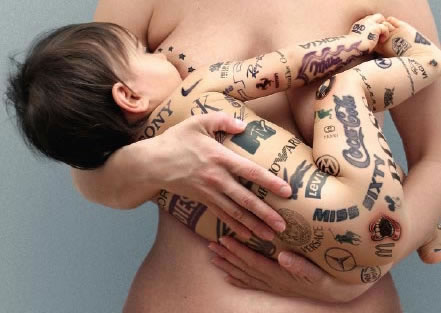
Shopping- a dream come true or a terrible nightmare? Some shopping is necessary. It can also be fun. For many people it is a hobby, often a very enjoyable one. We have even invented a new phrase, retail therapy, to describe the good feelings we can get from buying things. Shopping makes many of us feel better. However, it can go badly wrong too, when for some people, their spending gets out of control. Without a doubt, we live in a very "spend-happy" society. Generally, we are finding themselves in debt.
There is a video about consumerism and some tips to be a better consumer.
Children and young people are generally very vulnerable to advertising, because they haven't a critical mind and ability to read the true message that a particular advertising transmits.
A statistic study in USA says that children are exposed to 30 000 ads per year. We are exposed every day to advertisements that persuade us to buy the products.
Nowadays, we are obsessed by our body and by the way we look. There are people who often do plastic surgeries and many people turn to eye surgeons, cosmetic dentists, hair and make-up artists, stylists and to personal trainers to modify their bodies and their appearance.
But these procedures are very expensive, so young people modify their appearance through more simple ways: they do tattoos, dye their hair and get sun tanned.
The number of young European people that change their hair colour is increasing every day. But if you are looking for a modern appearance you can have a surprise... Some people are over sensitive to the chemical substances that exist in the dye products. They can cause breathing difficulties, hair loss, burning, redness, eye’s and neck’s swelling and even hospitalization! (Click here to have more information: http://www.fda.gov/WOMENS/getthefacts/hairdye.html).
In 2006, 22 dye products were forbidden by the EU (click here to read more information http://europa.eu/rapid/pressReleasesAction.do?reference=IP/06/1047). In Denmark, 75% of young girls dye their hair and they start doing it at the age of 16. Only Japan has a bigger percentage: 85%.
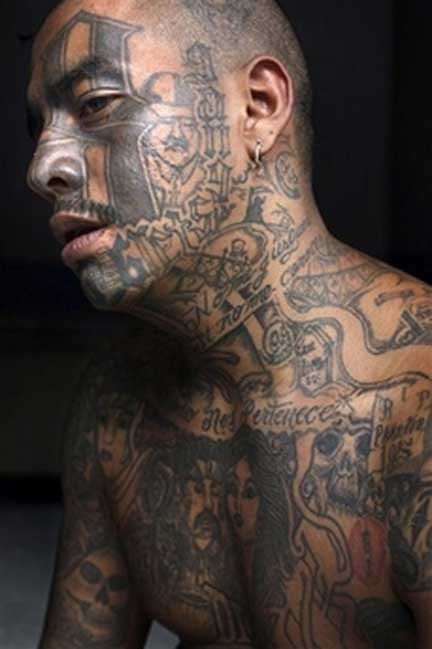
Tattoos seem to be “cool”: there are a lot of celebrities that show their tattoos and talk about them. But doing tattoos has some risks: it can cause infections and reactions like allergies, irritation, nodules, organ damages, scares and sun sensitive growing.
Before doing a tattoo, you should look for some information about problems caused by tattoos, talk to a doctor about your skin characteristics, talk to people who already did tattoos and examine the studio’s hygiene, experience and professionalism.
We like to see a tanned person and we usually say “You are so pale that you look like sick. You must get sun tanned!”. Celebrities are always tanned and some people do solaria programmes. We like sun and it is good to our health (skin vitamin D production) and humour but we must have precautions. If we don’t respect the advices to avoid sunburns, we may get reddened skin, feel pain in the burned area and later skin cancer.



 Example: Worten